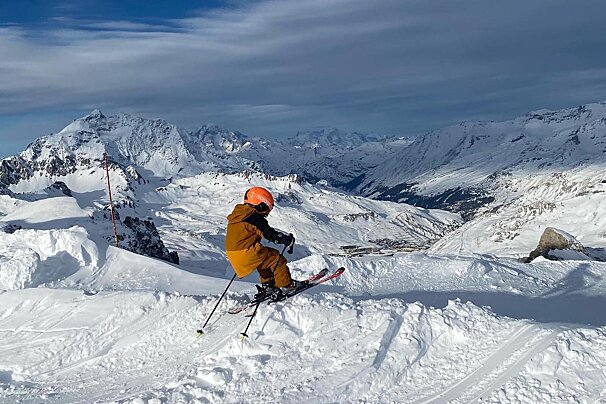
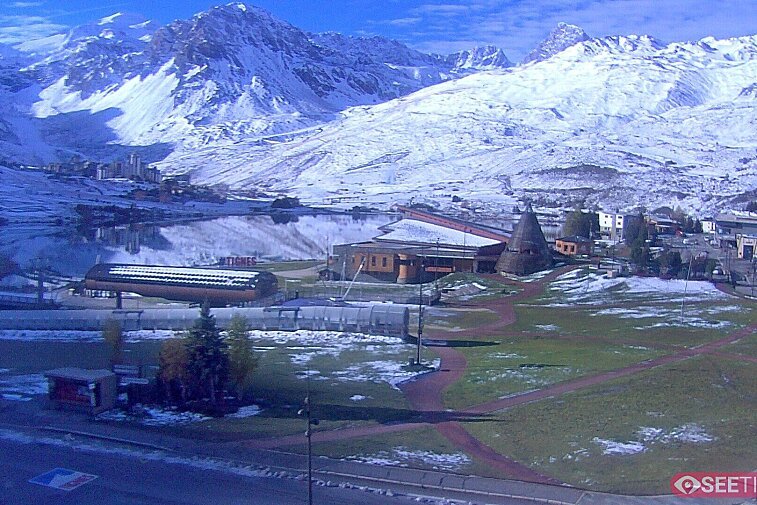
Tignes is perfectly set up for mountain biking in summer with a handful of lift accessed zones and plenty of cross country and enduro riding.

Mountain Biking in Tignes
Discover the top Tignes mountain-biking
Due to the resort's high altitude it has some of the most diverse bike terrain in the Alps.
And if you don't have all the gear, you can rent it when you get here either through your accommodation provider or through local sports shops and mountain bike guides.
Watch this
Biking routes

You will find around 160km of trails, accessible via five mountain bike lifts. These trails are suitable for all levels of riders - there are beginner and family trails and practise areas, to full on downhill and freeride tracks, four cross tracks and miles and miles of single track - all very well signposted to help you find your way around. There's also a bike park, a water jump and an airbag that you can practise on too, depending on how brave you're feeling, plus you can now link up to neighbouring Val d'Isère really easily. Read more about the mountain biking trails in Tignes here.
There is a huge airbag set up in Tignes Le Lac so you can jump, flip and launch yourself onto it in complete safety!
Lift access for mountain bikes
The lifts are open every summer and have specifically adapted racks or hooks for your bikes allowing you spend more of your time riding incredible alpine terrain rather dragging yourself up steep inclines (unless that's what you like).
Lift passes are free in summer, you just need to put down a nominal deposit when you collect the ticket from the main lift pass office. You have access to three lifts in Tignes and two over in Val d'Isère.
Tignes offers a free mountain bike shuttle during the summer months, seven days a week. It's free to use but spaces are limited to a maximum of eight people for the Brevières stop.
Hiring and buying bikes

Whether to go full-suspension or hardtail is a question which creates a lot of healthy debate amongst the mountain biking community. Whether you're renting or buying you should first decide which type you're looking for, and there are numerous makes and models of both types available.
What bike to use
Full-suspension
Both front and rear suspension that is effective at absorbing lumps, bumps and jumps, thus providing better performance and a smoother ride.
Pros:
- much more comfortable and arguably more control over the rough stuff with more options to adjust to suit the terrain
- you can make a full suspension bike ‘lock out’ when needed, so the experience is like riding a hard tail
- can handle larger drops and jumps
- more forgiving and confidence-inspiring as they have a wider margin for error allowing you to ride above your skill level
- better tech beneath you - modern full-suspension frames are incredibly sophisticated
Cons:
- it can be more energy intensive on the uphill unless you have a ‘lock out’ facility on the rear suspension to avoid ‘suspension bobbing' as you climb
- a weight penalty for all that bump proofing suspension
- potentially more moving parts to repair should anything go wrong
- difference in price is quite significant
Hardtail
A bike with no rear suspension. Suspension forks may be at the front of the bike but its back post is rigid.
Pros:
- in general, tend to require less maintenance and perform better on steep uphill climbs and sprints to the finish line
- inexperienced or beginner riders may prefer to start with a hardtail complete with front, lockable suspension
- good to get a feel for preferred type of riding before progressing to a full-suspension bike
- on the whole more efficient as they're lighter, maintain speed and no energy is wasted compressing a rear shock as you pedal
- cheaper
Cons:
- because of the rigid frame you won't be able to make any adjustments
- less efficient on rough terrain, rather than rolling over, the rear tyre hops up off rocks and trees when on a rough trail
- less comfortable as those shocks and vibrations transfer through the bike into your body, using your arms and legs as shock absorbers which can be tiring
- less traction due to the rear wheel rebound on rough terrain
To rent or to buy
Renting
If you plan on renting equipment then there are plenty of Tignes mountain bike hire shops hiring out both full-suspension and hardtail mountain bikes. On average you can pay anywhere between €16 to €80 for a day's hire, depending on whether you select a bike with or without suspension. It's also possible to hire mountain bikes for children from around €15 a day.
Buying
There are numerous makes and models of both types available to the potential buyer so when deciding on which type of bike is best, it's important to consider the following:
- your budget of course
- the type of riding you and your bike will be undertaking
- the typical terrain and angle of decent you will be riding
Equipment for cycling

When out and about on the trails, here's a checklist of what you will need:
- water - one of the biggest problems in this region is the heat. Fit two bottle cages to your bike and take 750ml bottles containing electrolyte drinks
- sunscreen - don't forget that summer in the Alps is very hot, the thin air and hot summer sun means you will burn quicker here than at home
- windbreaker - although it may be warm in the valley temperatures can drop rapidly as you climb, weather can change quickly and the rapid descents can cool you down fast
- snacks - energy bars and gels are a very good idea if you're planning a day out
- mobile phone - being able to contact someone to pick you up if your chain breaks is helpful
- money - you may need it in an emergency or just for a beer at the end of the day
- basic repair kit - you can't fix everything by the side of the road but not all breakdowns require the day to end
Cycling hotels and camps

There are numerous companies taking the hassle out of organising it all, offering tailor made mountain biking holidays. There are many specialist chalet companies that run catered holidays and several local tour operators offering active mountain biking programmes, with little extras here and there that perfectly suit a range of riding levels from beginners up to skilled riders.
They will guide you around the various biking trails, offering some great cross-country riding and single track trails with spectacular scenery in the background.
Due to the technical nature of the routes selected, they do tend to have small group sizes allowing for better riding experiences and usually do not take beginner riders on their guided rides. If not everyone's a biker, some offer a discounted rate for accompanying guests who are not riding.
Wherever you choose to ride, you will inevitably have a thoroughly enjoyable experience in and around the Tignes area. The mountains are there to be enjoyed by everyone, so remember to be considerate of others when on your bike, following the 'mountain bikers code of conduct' at all times.
Flying with your bike

A review of the main airlines' Terms and Conditions, in relation to sports equipment baggage, indicates that it's highly likely that you will be subject to a charge for taking your bike on board.
Easyjet, Aer Lingus, Ryanair, and KLM all charge an additional one-way fee to carry your bike. At time of writing British Airways (and their partner Swiss Air) does not charge extra fees for taking bikes on their planes, providing they fit within the free baggage allowance and are packed in a hard shelled container, but we recommend you always check when booking.
Make sure that the combined weight of your luggage does not exceed your allowance. Although you may have paid an excess for your bike, its weight may be added to the weight of your hold luggage and there can be a penalty for any kg over the allowance.
How to bring your own bike
Before you travel
We'd advise your bike is in tip top condition before lugging it all the way over to France. A day riding in the Alps equates to many rides in the UK, and the wear and tear on your bike reflects this. If you start the week with your bike in a poor to average state of repair it will let you down at some point and spoil the day, if not the week's enjoyment.
If you're not a competent bike mechanic then have your local bike shop service your pride and joy. It's also money well spent to upgrade your tyres if they are of the lighter weight cross-country variety, and purchase some free ride tyres with a 2.3 section to smooth your way and avoid the punctures.
There is every chance a set of brake pads will disappear in a week, so bring a spare pair and carry them with you on the trails to avoid that metal on metal effect!
If you run out of time before you come away, Tignes local bike shops will be able to carry out a service for you.
Packing your bike for a flight

Check the rules of transporting your bike with the airline you're travelling with and make sure you have reserved your bike's spot on the plane.
Most airlines stipulate the following:
- bikes should be contained within a protective box or appropriate bike bag
- only one bike should be carried per box/bag, and no other items (except protective padding) should be included within the box or bag
- handlebars and pedals must be fixed sideways against the frame or removed
- tyres should be deflated slightly to reduce the risk of damage
Bike travel insurance
Check out your travel insurance arrangements to ensure your bike is covered.
Bike packing options
- cardboard bike box - pick up for free from many cycle shops. These boxes are ideal to travel with, you can recycle it on arrival and get a new one before you return home. These can be a nightmare to move around where there aren't any luggage trolleys available.
- CTC bike bag - heavy-duty polyethene bag designed for bikes, you'll need to deflate the tyres, remove the pedals and turn the handlebars inwards, but likely you won't have to remove the wheels. Not all airlines will accept these bags, due to their lack of protection, so check before you buy one.
- dedicated bike bag - either hard or soft case, the former providing more protection against damage, they have padding in all the right places and some have wheels for ease of travel.
Top tips:
- put all your clothes in plastic bags and use them to pad the bike
- in addition to bubble wrap (and clothing), purchase some pipe lagging and zip ties from a DIY store to put around the frame of the bike for protection during transportation
- the most frequently damaged part of a bike is the rear gear hanger, so remove the rear gear mechanism and tie wrap loosely to the frame to avoid this.
- this applies almost equally to disc brake rotors if your bike sports them, so take them off, likewise pedals, it's only a five minute job and will prevent you engaging in a fruitless search for an obscure part in resort
- print out the airline's policy on carrying bikes and have it ready to politely show at check-in if necessary.
- if you've booked your bike on the flight, print your booking confirmation and carry with you when you travel
- leave yourself extra time at the airport to allow for any check in issues
Taking your bike on the train

Going on holiday to France with your bike is pretty straight forward, but as with a lot of things, it's better to book in advance.
The Eurostar
Currently only allows you to take your bike on selected trains between London and Paris, so it's best to book early to avoid disappointment. At the time of writing, Eurostar was working on reopening the service to other destinations in the near future, so check available routes before you start planning. Follow the steps on their website for reserving a spot for you and your bike.
Once you're in France getting around with your bike can be straight forward, but again planning ahead and getting to the station early are highly recommended.
Domestic or regional trains (TER) and tourist trains
Quite often they allow you to transport your bike for free, although you may have to put it in a bike compartment, hang it from a hook to save space, or fold it up and take it on as hand luggage. Spaces are limited and you cannot reserve in advance, and in some regions bikes aren't permitted Monday-Friday during rush hour.
TGV InOui
You must book a space for your bike if it's non-folding and this needs to be done when you buy your ticket. Your seat will automatically be placed near to the bike rack.
Regional trains
In Ile-de-France, (the region surrounding Paris), these trains are called Transilien and they are the country’s busiest commuter trains. They operate into all of Paris’ stations and run on lines with a letter associated (line K, line P, etc). They also include the RER trains, which run on lines A to E. You can take your bike on board a Transilien Monday to Friday, before 06:30, between 09:30 and 16:30, then after 19:30; at any time on weekends and public holidays and at any time if it's folded or placed in a bike bag and does not cause fellow passengers any inconvenience.
Intercity trains
It's best if you can dismantle your bike and carry it on in a bag no more than 130x90cm. Some of these trains require a seat reservation, whereas others do not. Consequently, according to the type of train, it may or may not be necessary to book, or pay, for a place for your bike.
E-mountain biking

This is an industry that has seen incredible interest and growth, largely due to rising technological advances and rapidly charging batteries, and it being an eco-friendlier and cheaper alternative to mainstream transportation.
Specialized, one of the big three, was one of the first to introduce e-bikes to their mountain bike line-up, and now almost every bike brand has several eMTBs on offer.
What is an eMTB?
A mountain bike with an integrated motor that assists the rider when pedalling.
There isn't a throttle, so if you don't pedal there is no support, and they only provide support up to a certain speed limit: the speed limit in Europe is 25km/h and 32km/h in North America.
Whether they are hardtail or full-suspension, there are three distinct categories: Light, All-round, and Power.
They come with all the things a traditional mountain bike has, but they are heavier and have distinguishing features such as an electric motor, a battery pack, and a handlebar-mounted computer that controls it all.
The assist modes consist of: off, low (barely helps), medium, eco, and a battery-draining sport/high mode.
What to consider when buying an eMTB:
- full-suspension or hardtail? According to the experts there is no good reason to ride a hardtail, unless you only ride on well-maintained roads or in the city. The more affordable price and lower maintenance costs are the main reasons you may buy hardtail.
- how much travel? This refers to the suspension and is a measurement of how much a wheel can move to absorb bumps. As a rough guide 130-170mm is ideal for all-round use. Bikes with less are usually trekking bikes, and more is suited to extremely demanding terrain.
- cost? Very manufacturer dependent, but a full-suspension eMTB will set you back at least €4,500 to €5,000, but the sky's the limit. Hardtails usually come in around €1,000 cheaper.
- what is the range? Heavily dependent on battery capacity, the mode selected, rider weight, and elevation profile.
Key terms:
- battery capacity - indicated in watt-hours (Wh). Depending on the bike this varies from 250Wh-1,000Wh.
- motor output - specified in watts.
- torque - measured in newton metres (Nm) and describes the driving force with which the motor supports the rider when pedaling. The higher the torque, the more assistance.
- wheel size - 27.5", 29" or a mix of the two are the three common wheel size combinations.
- suspension - depending on the purpose and model this varies between 100-200mm.
Fat tyre eMTBs
You'll see these around the trails from time to time, and simply put they are an eBike with tyres of four inches plus in width.
Designed primarily to ride over snow, the heavy-duty tyres gives a greater ability to travel over more surfaces than bikes with a normal tyre width, such as snow, dirt, sand, wet stone, loose ground like leaves, twigs and rocks, and pavements or parks.
They improve balance and stability on any type of terrain, and are therefore perfect for those who want more versatility and comfort, as comfort is definitely their greatest advantage. Rising in popularity, they can be harder to handle on the trails as their braking isn't as precise and performance isn't as good as with a bike on regular mountain bike tyres.
Also worth remembering is that by having fat tyres, the frame, rim and axles are bigger and heavier, which isn't ideal for everyone.
Sharing the same trails
There has been some controversy in some areas around eBikes sharing the same trails as mountain bikers, hikers, horse riders etc., and in some countries and states they are banned from non-motorised mountain bike trails. Tignes has trails open for eMTBs, with the possibility of getting back up using the lifts it just remains for you to go have some fun.
The majority of rental shops in resort will have e-bikes available for hire should you wish to try this fast-emerging sport for yourself... just be warned, it's addictive.
More inspiration...
For information on individual itineraries and bike parks, see our mountain biking routes.


![a picture of a hotel suite at [itemref]](https://cdm0lfbn.cloudimg.io/v7/_images_base_/image_uploader/photos_e2/original/campanules-174-suite.jpg?ua=1766578616&p=listing_summary_middle)